Since COVID, New Brunswick’s population has surged, and so have its energy needs.
New technologies, like AI and electric vehicles, are also increasing demand on the power grid, and that pressure is only going to intensify in coming years.
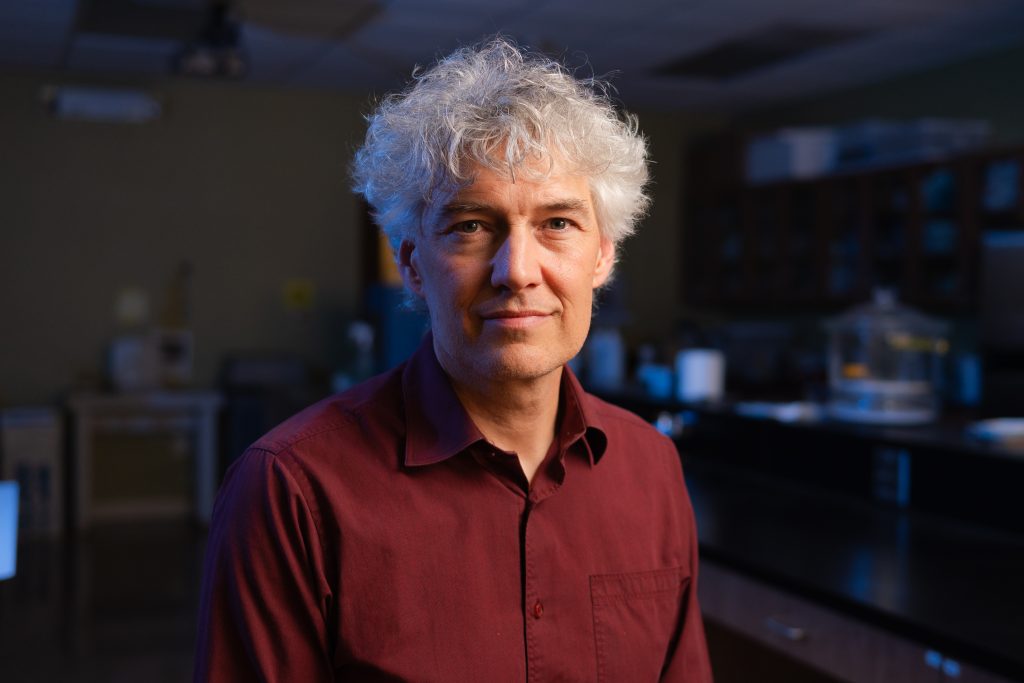
With NB Power predicting an electricity shortfall as early as 2028, Dr. Olga Palazhchenko’s work on the next generation of nuclear reactors is becoming more important every day. She and her colleagues at the University of New Brunswick’s Centre for Nuclear Energy Research are working to make nuclear energy more convenient and safe so as to accelerate its adoption.
Dr. Palazhchenko’s current research investigates ways to improve the storage and disposal of the fuel used in the next generation of nuclear reactors, Small Modular Reactors or SMRs.
A New Era of Integrated Nuclear Power
Canada is one of 38 countries committed to tripling global nuclear capacity by 2050, and New Brunswick is already leading the way. Right now, Canada’s only functioning nuclear reactor outside Ontario is perched at Point Lepreau, 40 km southwest of Saint John.
This reactor uses CANDU technology and operates at a traditional, large-scale industrial plant. Advanced reactors, including small modular reactors (SMRs) and microreactors. These reactors are small enough to be built and shipped in modules, allowing for integration at existing CANDU sites or transport to more remote locations Nuclear energy is about to become more convenient and easier to integrate into New Brunswick’s energy mix.
Dr. Palazhchenko explains what the future of nuclear energy could look like: “You can put a microreactor on the back of an 18-wheeler, and you can move it somewhere, move it to where you have or a very secure AI data center or to somewhere that you need a water purification plant.”
Down the road, she predicts, advanced reactors will operate alongside larger reactors, even serving as “nuclear batteries” that can be plugged into the energy system as needed.
Making Clean Nuclear Energy Even Cleaner
Because nuclear energy doesn’t produce any greenhouse gas emissions, it’s considered a “clean” form of energy. Before advanced reactors can be widely adopted, further studies are needed on the long-term storage of nuclear fuel. Canada’s long-term nuclear waste management plan is designed and implemented by the Nuclear Waste Management Organization and regulated federally by the Canadian Nuclear Safety Commission.
Throughout its lifecycle, nuclear fuel is housed in a metal sheath called cladding. Once the fuel is no longer of use, it is currently stored for decades onsite at secure nuclear facilities, still in the cladding. Future storage of the clad used nuclear fuel in Canada is planned to be underground in deep geological repositories. During its lifetime in the reactor, the cladding can undergo various degradation mechanisms, and that requires further study to ensure long-term safe storage, especially in worst-case accident scenarios where additional safety barriers could be breached.
Dr. Palazhchenko is studying how advanced reactor cladding materials react to different environmental variables, such as exposure to leaking water and high humidity in potential, accident scenarios during long-term storage. This includes the extent to which the chemical byproducts of nuclear fission interact with the cladding, altering its composition and gradually weakening it prior to acceptance into a repository.
To test changes to cladding outside the lab would take 10 years or more, but inside her lab, Dr. Palazhchenko can speed up the pace of damage and of the learning process. Doing this kind of applied research, she says, is an engineer’s dream. She’s eager to pass her learning along to industry partners so they can commercialize it and bring improved advanced reactors to the market as soon as possible, setting up NB and the rest of Canada for an energy-secure future.