It’s no secret that Northern New Brunswick has been lagging behind the rest of the province in economic growth.
New money flowing into the region through ACOA, NB Power, and private investors is giving the region a promising boost. As a prime example, the Belledune Port Authority is on a mission to become a power-hub for both transportation and green energy.
With growth, however, comes questions about how an expanded industrial footprint could impact the environment.
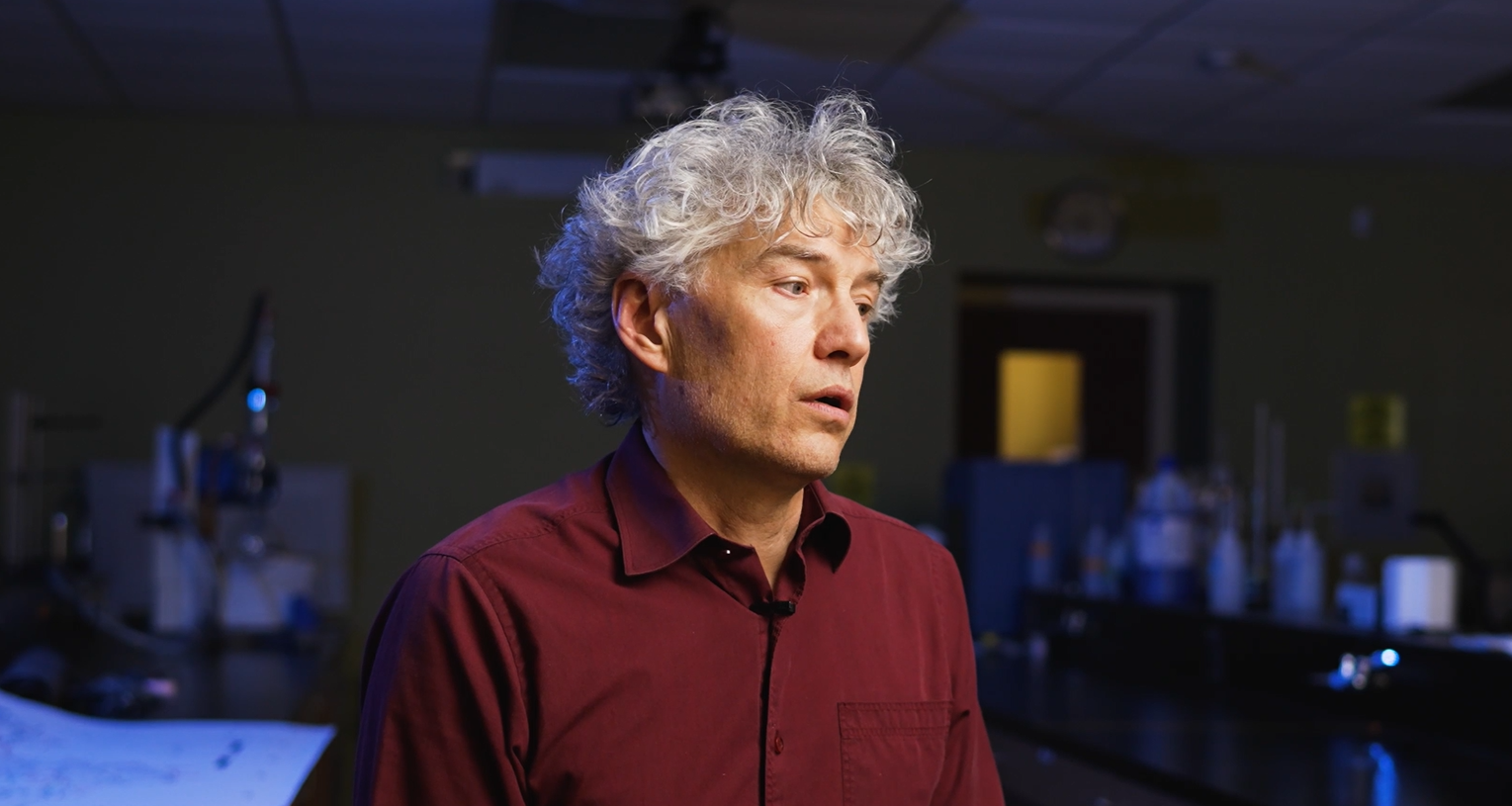
Dr. Alain Patoine, a biologist at the Université de Moncton’s Shippagan campus, is discovering clues about environmental impact in the soil beds of rivers and estuaries.
Pollution is Not Always Obvious
Shippigan is a town with industrial ambitions. In 2023, the university campus established a robotics and AI hub to help upgrade the local seafood processing industry.
What effects could such industrial development have on water quality in the surrounding area?
The answer, says Dr. Patoine, depends on a host of different factors, many which are unseen to the naked eye.
When we think of industrial pollution, we tend to think of visible factors, like factory smoke or raw sewage issuing into a lake. But many other factors aren’t noticeable without a microscope. Bodies of water are home to an incredibly diverse number of organisms, and the tiniest of those can influence water quality.
Lessons from the Algae Record
Dr. Patoine’s recent work, funded partially by ResearchNB, has focused on strains of algae that can’t be detected without special equipment.
Dr. Patoine calls algae “key players” in water systems because they represent the bottom of the food chain, and they serve as markers of water quality. Some variations of algae flourish when water quality is excellent whereas others make water toxic.
Like paleontologists, who read history from fossils, Dr. Patoine and his team collect soil samples from different layers of soil at the bottom of the Pokemouche River and its estuary. Each layer shows traces of algae from a different time period.
Back at the lab, the team analyzes the soil samples to determine the types of algae they contain and create a timeline of water quality spanning decades. By comparing this data with information about population growth, infrastructure development, and industrial activity, the researchers can connect human changes to the land with changes in the water.
Water Quality is Quality of the Economy
Dr. Patoine’s research focuses on miniscule organisms, but the implications for New Brunswick are large.
“We are all dependent on water resources,” explains Dr. Patoine. “The questions I ask about the factors that will promote the development of toxic algae have very concrete, very direct impacts on recreational tourism, on recreational fishing, on commercial fishing.”
As Northern NB pursues economic growth, such questions will become even more relevant not just to tourism and fishing but also to other industries. As we learn about historical changes in water quality, we’ll gain new information to help balance the health of the economy with the health of the environment that supports it.