Sensors are all around us—in cars, smartwatches, banking machines, automatic doors, and washing machines.
At a grander scale, industrial sensors also play a key role in defence systems and in tools used by civil engineers and environmental scientists.
For example, to run surveillance and weapons systems, the military relies on sensors embedded in drones, vehicles, and missiles. To address coastal erosion, engineers use sensors to assess how tides are affecting the shoreline. And to extract critical minerals, companies depend on sensors to identify the best place to start mining.
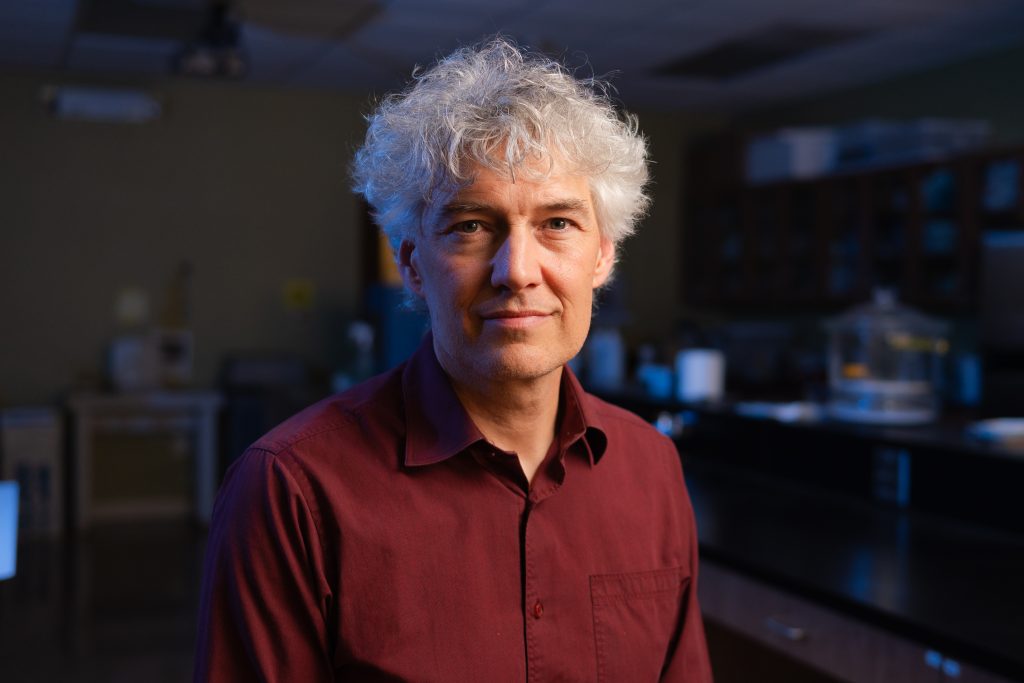
With so many decisions now depending on sensor accuracy, it’s becoming critical for Canadians to have access to the latest sensor technology. Otherwise, warns Dr. Brynle Barrett of the University of New Brunswick, “Canada is at risk of falling behind.”
Solving the Reliability Problem
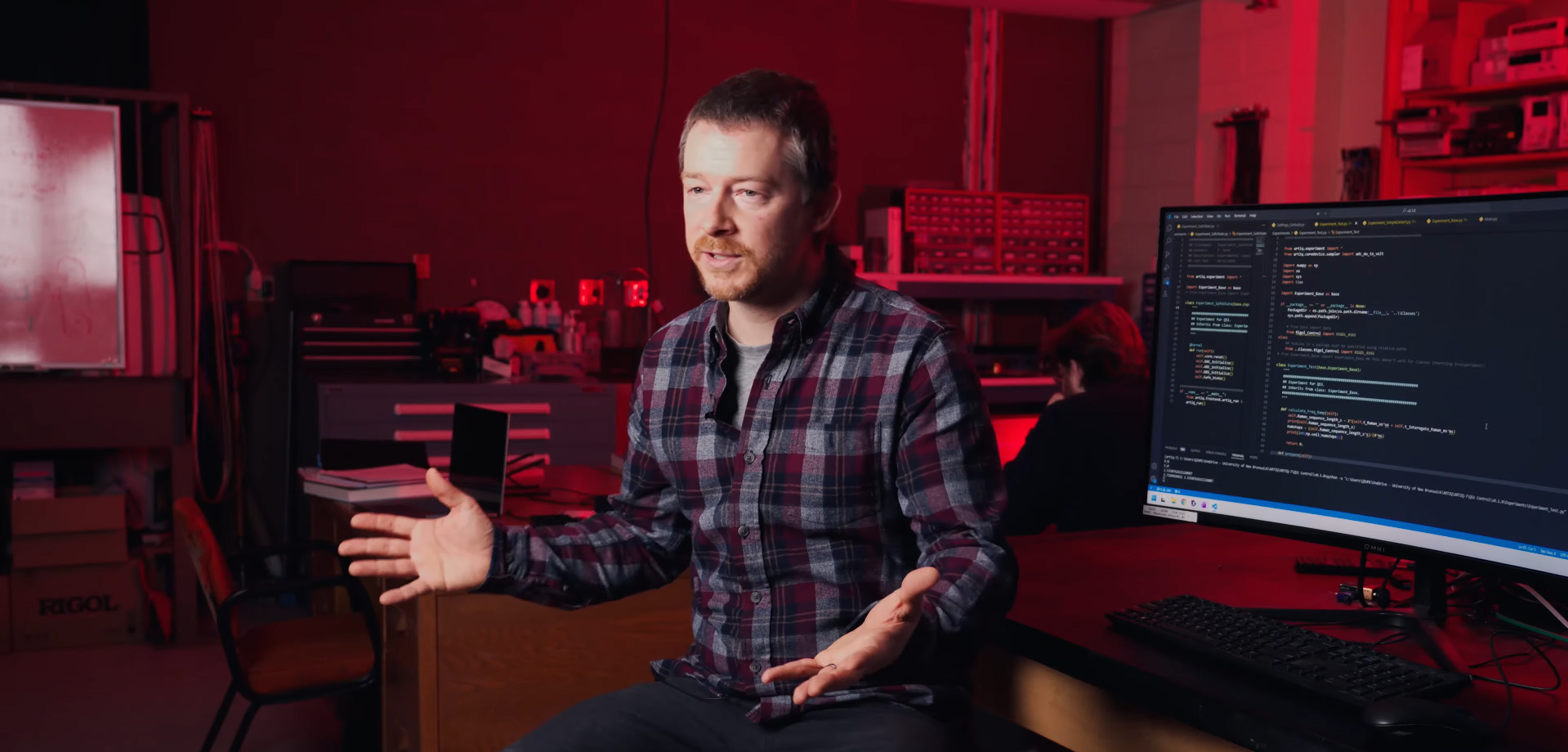
Dr. Barrett and his team are determined to see that doesn’t happen. Using innovative technology available in only a few labs in the world, they are developing the next generation of sensors. These will overcome a problem plaguing sensors currently on the market—the need to continually readjust them.
The measurement scale used in traditional sensors changes slightly over time. As a result, it must continually be compared against an outside reference point and recalibrated.
The sensors Dr. Barrett is creating don’t depend on external standards. They are “absolute sensors” that operate independently and maintain their precision over time.
The secret to this remarkable reliability? Super-cold temperatures and quantum physics.
Dr. Barrett’s sensors behave more predictably than other devices because the substance at their core, rubidium, is cooled to minus 273 degrees Celsius or lower.
At this extreme temperature, two things happen: the atoms become very still, and it’s possible to manipulate them as waves rather than individual particles. The cold makes the quantum nature of the atoms—their wave-like properties—easier to detect and control than under warmer conditions.
As a result, a quantum sensor consistently provides precise readings. It can also function in places satellite signals can’t reach, such as under ground or under water, and it’s not vulnerable to false signals or interference.
A Potential New Industry for NB
Dr. Barrett would like to see industry pick up the novel technology emerging from his lab so that New Brunswick can establish a future-looking industry around quantum sensing. In his view, capabilities in quantum sensing will be essential for both Canadian innovation and sovereignty, especially in domains such as defence, energy, natural resources, and aerospace.
That’s why Dr. Barrett considers it part of his research role to help build the workforce of New Brunswick’s quantum future. Students on his team gain specialized skills that are becoming increasingly valuable for their careers and for the province.
He says, “Quantum technologies aren’t going away, just like artificial intelligence isn’t going away. If you want to stay competitive, you need experts who know how to use this type of technology to build new instruments, new products.”